

You know something slows you down, but not where to start
Spreadsheets, emails, software that does not talk to each other: everything is a bit slow, and nothing is clear enough to act on.

Technology consulting for small businesses: we watch how your business really runs, with a digital audit, then hand you a written roadmap: what to fix first, with which tools and in what order. You decide with facts, not impressions.

These are the most common reasons a business calls us.
Spreadsheets, emails, software that does not talk to each other: everything is a bit slow, and nothing is clear enough to act on.
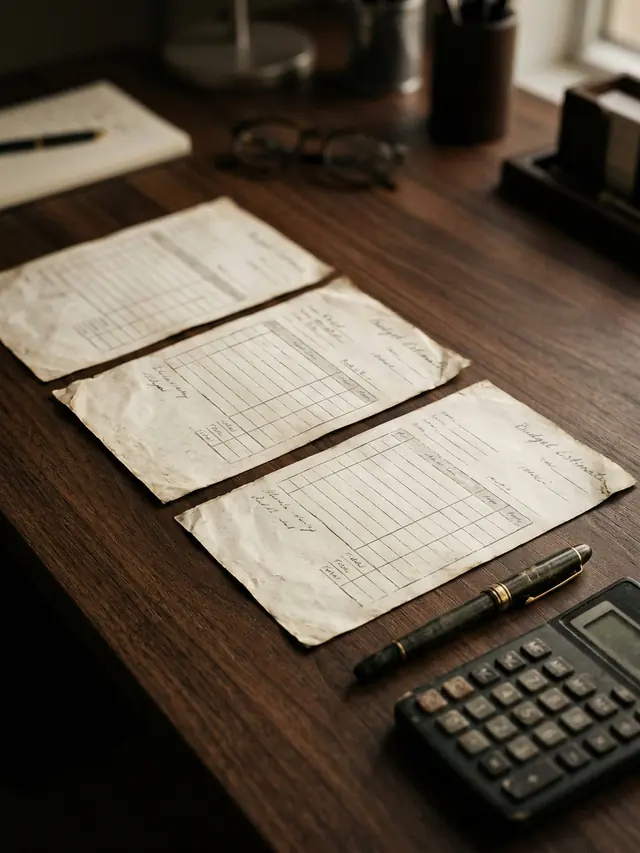
Three prices, three approaches, three vocabularies. Without a common grid, you cannot compare them fairly.

The tool may not have been bad: it simply was not chosen based on how your team actually works.

When they are away, nothing moves, because the way things are done is written down nowhere.
In each of these cases, the tool is not the problem. A clear plan is missing before the choice, because a good tool in the wrong place fixes nothing.
Every deliverable is concrete, written and yours. Here is what we do, and what you get from it.

We follow the path of an order, a client request or an invoice, and we note every re-entry, every wait and every risk of error.

A simple diagram of who does what and in which order, with the bottlenecks clearly marked.

A written plan: what we fix first, what can wait, and why. Every priority comes with its reason.

A comparison of the options based on your real needs, with the reasons behind each recommendation.

A hands-on session so your team understands the plan and knows how to use what is put in place.

Follow-up after delivery to adjust the plan when your situation changes.
At every step, you know what we expect from you and what you get back.
 1/5
A 15-minute call to understand what is costing you time or clients.
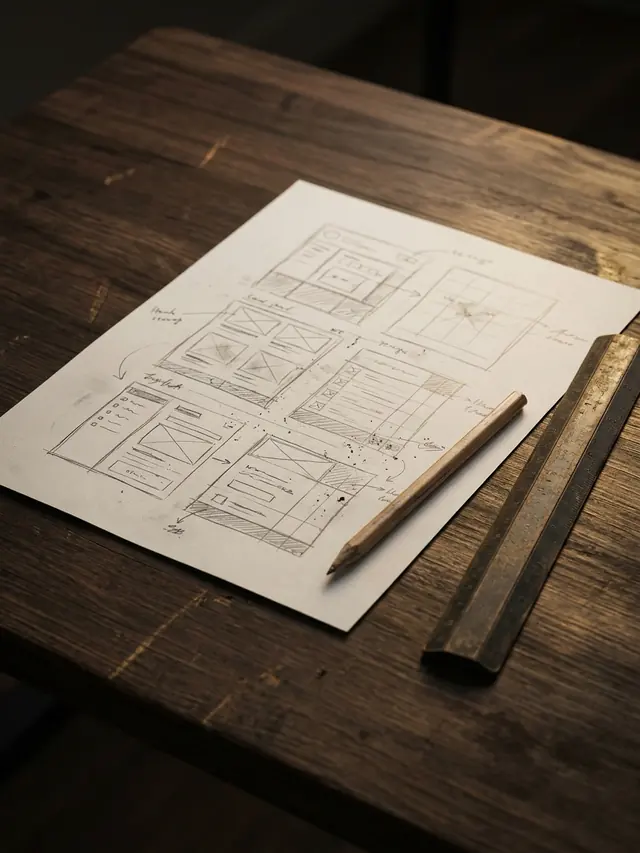 2/5
Before starting, everything is written down, so you know what you are committing to.
 3/5
We observe, we ask questions and we document your current processes.
 4/5
We hand you the plan and walk you through it in person.
 5/5
A consultation does not end with the last document: reality changes.
We do not promise percentages. Here is what you should notice, step by step.

You know which repetitive tasks to remove first, so your team stops re-entering the same data.
Each step is written and clear: fewer things forgotten, fewer “I thought you were handling that”.
You compare options with the same criteria, so you choose with facts.
You invest where it matters first, and avoid buying what is not a priority.
A business enters every order three times: in an email, in a spreadsheet and in its invoicing software. After the audit, the plan says to enter the order once and let the rest fill itself in. Expected result: less re-entry, fewer transcription errors and a team that knows where to find the information. This is an illustration, not a client.
Simple arithmetic on the numbers you enter (52 weeks a year). It is an example, not a promise of savings: the audit tells you what is really possible.
We would rather tell you now than waste your time.

These are generic examples to illustrate how we work. They are not clients.

By email, text and phone, and everyone writes them down differently.
One defined entry point, one way of recording, and a plan so the rest fills in automatically.
Prices and vocabularies differ, and the decision goes in circles.
A comparison grid weighted by your criteria, so you can decide with written reasons.
It crashes, several people open it at once and nobody dares touch it.
A step-by-step migration plan to a suitable tool, without stopping your activities.

The way things are done lives in the heads of a few people.
Written processes, simple diagrams and a training session.
After the diagnostic, we set a delivery date together. If we miss it, we keep working for free until it is delivered.
The date assumes you give us access to the agreed people and information on time. Everything that is included is specified in the written proposal.

It depends on the size of your business and what needs to be analyzed. We do not give you a random timeline: after the free diagnostic, the written proposal contains a precise delivery date.
The diagnostic is free. For the consulting itself, the price varies with complexity: after the diagnostic, you receive a fixed price and a delivery date, in writing.
It is a 15-minute call. You tell us what is costing you time or clients, we ask questions and we tell you honestly whether we can help, and how.
Depending on your proposal: the audit of your operations, process mapping, the roadmap, the tool comparison, training for your team and follow-up. The written proposal spells out each item before you commit.
Nothing in particular for the diagnostic. For the work itself, we will need access to the right people and a few documents, for example spreadsheets or sample invoices, and a few conversations with you and your team.
The adjustments set out in the proposal are included. If your situation changes, we can keep supporting you, depending on what you want.
Two free tools to arrive at the diagnostic with clear ideas. No purchase required.
Book a free 15-minute diagnostic. We listen to your challenges and tell you honestly whether we can help.